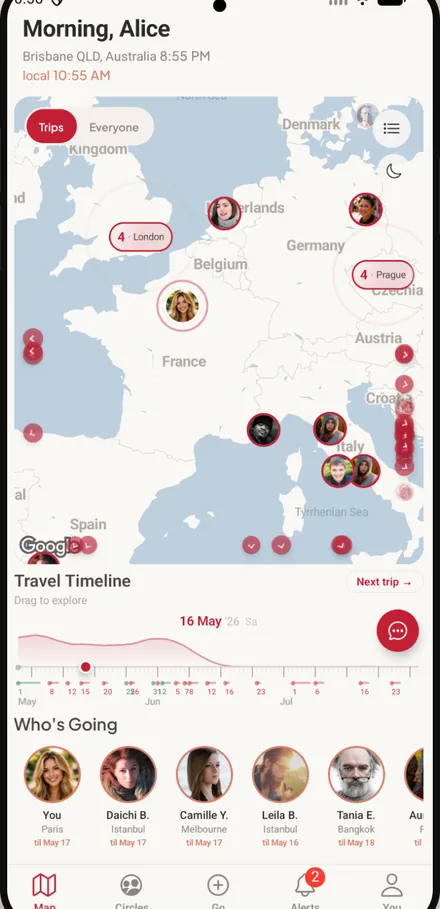
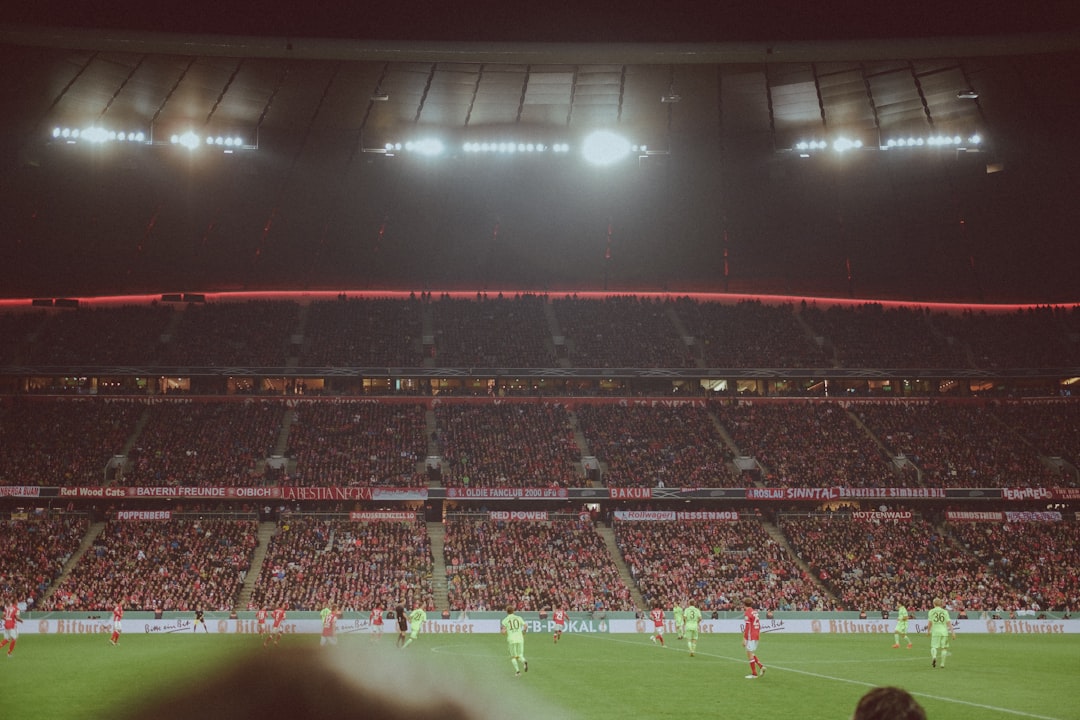
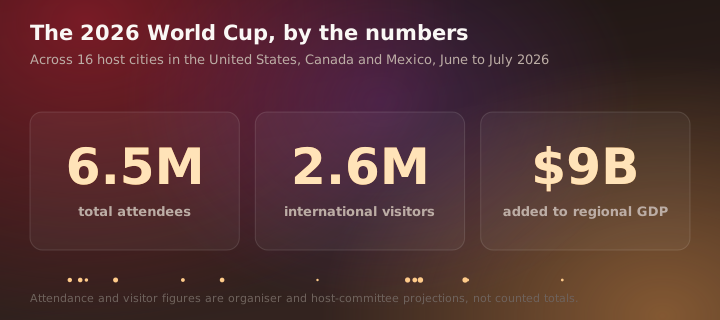
A World Cup does not fill a host country evenly. It concentrates it. For six weeks across the summer of 2026, roughly 6.5 million people, including about 2.6 million international visitors, move through 16 cities in the United States, Canada, and Mexico, and they do not spread out. Noovo is built around the exact three questions a tournament forces you to answer at once, who is going, where, and when. Reading the rhythm of the crowd, the surge on match night and the calm everywhere else, is the difference between a trip that flows and one that fights the crowd the whole way.
I learned this the year I worked as Fujitsu's VIP guest guide in Johannesburg during the 2010 World Cup, escorting their international guests around the city and to the matches. Moving people through Joburg day after day, you feel the pattern in your bones. The country was never uniformly packed. The energy pooled. It gathered around the venues and the fan parks and the streets near them, electric in those spots in a way I have never seen since, while a few neighborhoods over the day carried on almost normally. Reading that map, knowing which parts of the city were surging and which were calm, was most of the job. It is also the single most useful thing to understand before you book anything for 2026.
The World Cup concentrates travelers, it does not scatter them
The headline number for the United States alone is around 1.2 million international visitors, and their flight searches and bookings cluster tightly around host cities rather than spreading across the country. Analysts describe the same effect on the ground, intense visitor inflows into tournament cities and noticeably softer demand in the places without a match. A country hosting the World Cup does not become uniformly crowded. It develops hotspots that move with the fixture list.
That has a practical upside most people miss. If your reason for the trip is the tournament, you plan around match nights. If your reason is the country, you can often have a quieter, cheaper visit by staying one city over from the action and traveling in on the days that matter.
Prices climb, but the surge is lumpier than the headlines
Thirteen of the 16 host cities have seen hotel rates jump at least 80 percent year over year. The reflex is to assume everywhere is unaffordable and sold out. The reality in 2026 turned out messier. Demand never caught up to the early forecasts, so that gap is now showing up as unsold rooms and game-day rates sliding off their peaks.
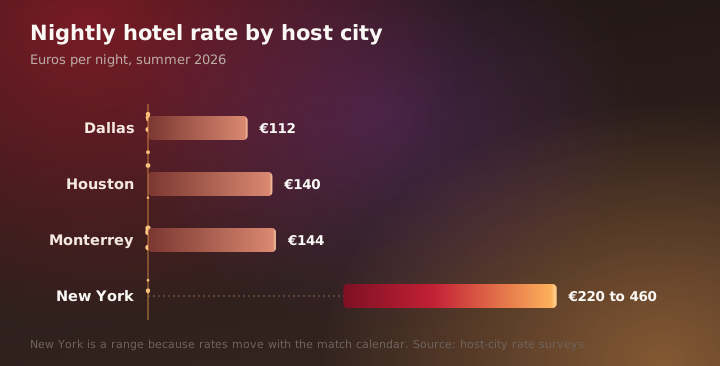
The spread between cities is enormous. Dallas has stayed the most affordable of the host cities at roughly 112 euros a night, ahead of Houston near 140 and Monterrey around 144. New York runs the other way, from 220 to over 460 euros a night near MetLife Stadium. In Guadalajara, rooms that averaged about 90 dollars last summer have been listed as high as 511. The price you pay depends far more on which city you pick and how you book than on the tournament itself.
Match nights are the real price signal
Within a single city, the cost is driven by the calendar, not the postcode. Match-night rates run meaningfully higher than non-game nights in the same city. So if you are building a multi-day trip, anchor your stay around the night you actually need a bed near the stadium, and avoid paying the premium on nights with no game.
Two more levers worth knowing. Refundable and free-cancellation rates let you lock a room now and rebook if prices keep drifting down, which they have been. And the free FIFA Fan Festivals run for weeks, not days, with matches shown daily in host-city parks. A cheaper host city plus a fan zone can deliver most of the atmosphere at a fraction of the marquee-match cost. Even shuttling VIPs to the marquee games in 2010, I could see that the fan parks were where the tournament actually lived for most of the people who were there. That has not changed.
Three countries, three front doors
The 2026 tournament is the most logistically complex in the event's history, and not because the football is hard to reach. For the first time, three sovereign countries with three separate entry systems are co-hosting. A fan chasing matches in Los Angeles, Guadalajara, and Toronto has to satisfy three governments, not one.
The short version, per the U.S. Department of State:
- United States. Travelers from the 42 Visa Waiver Program countries apply for an ESTA online for 21 dollars, usually approved within minutes though it can take up to 72 hours. Everyone else needs a B1/B2 visitor visa. Admission is always decided at the border.
- Canada and Mexico. Separate rules again. Qualifying to enter one country does not qualify you for the next.
- At the airport. With tournament crowds stacked on top of normal summer travel, border waits can run one to three hours. Global Entry or SENTRI is worth it if you are crossing more than once.
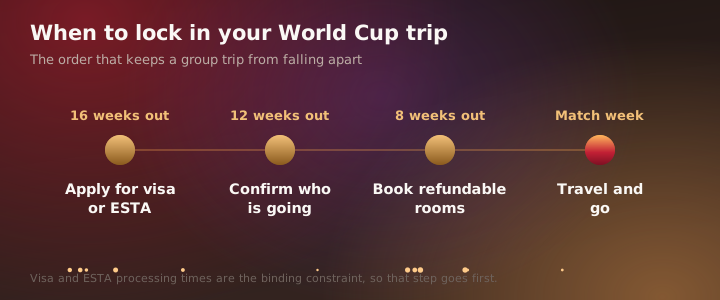
The one date that matters, apply as soon as you have confirmed tickets, ideally 12 to 16 weeks before you travel. For some nationalities, visa processing can exceed 12 weeks on its own, a barrier that researchers note has already shaped who can actually attend.
What a host country actually feels like
Here is the part the price charts never capture. The job of a VIP guide is to make an enormous amount of logistics vanish. Guests would step out of a lobby and into a smooth, on-time run to the stadium, and none of them ever saw the part underneath, the routes replanned around match-day traffic, the timing worked backward from kickoff, the constant reading of which roads and which districts were about to fill. A whole city was quietly rearranging itself around the fixture list, and the entire craft was making that feel like nothing at all to the person in the back seat.
And then you would get them into the stands and it was worth every hour. Something happens to people at a World Cup, VIPs included. The formality drops. Strangers from countries that had no business sharing a moment were trading scarves and teaching each other chants. A tournament collapses the distance between people faster than anything else I have witnessed in travel. The work is real and mostly invisible. The payoff is a kind of open, generous energy that a normal tourist season never produces. If you go in 2026, that is the thing to actually chase. Not just the match. The room around it.
The question a tournament forces, who is actually going
Notice what a World Cup trip does to the usual planning order. The when is fixed for you by the fixture list. The where is narrowed to 16 cities. The variable that is left, the one that decides whether the trip happens at all, is who, and whether your dates line up with theirs.
That is the exact problem Noovo exists to solve. Instead of a group chat where six people slowly discover they were never free on the same weekend, you start from a shared window and see who it actually overlaps with. If a friend has already marked those two weeks in July as open, that is the trip forming in front of you. The tournament supplies the reason and the date. The only thing left is to find your people and commit before the good refundable rooms in the cheaper cities are gone.
If you are working out the money timing, our guide on the booking window that actually works covers how far ahead to lock flights. If it is turning into a group, how to plan a group trip without losing the group chat is the one to read next. And if the whole thing started with a block of free time rather than a destination, start with a free week is the pillar it hangs on.
How to plan a World Cup trip that actually works
- Decide your reason first. Chasing specific matches means planning around match nights. Wanting the atmosphere means a cheaper host city plus a fan festival often beats a marquee ticket.
- Pick the city on price, not prestige. Dallas, Houston, and Monterrey sit far below New York and the peak Guadalajara nights for the same tournament.
- Book refundable, anchored on game nights. Lock a room now, rebook if rates keep easing, and do not pay match-night prices on nights with no match.
- Sort entry early. ESTA or the right visa, 12 to 16 weeks out, and a fast-track program if you are crossing borders.
- Settle the who before the where sells out. The date is fixed. Find whose free time overlaps yours, then commit.
A World Cup is one of the rare moments when a whole country turns outward and a few cities briefly become the most alive places on earth. The travel math around it rewards people who understand the rhythm and move together. Find your people, pick your city, and go be in the room when it happens.