The "destination dupe" is the swap from a famous, overcrowded, expensive destination to its quieter, cheaper, structurally similar neighbour. Lisbon instead of Barcelona. Ljubljana instead of Vienna. Taipei instead of Tokyo. Sicily instead of the Amalfi Coast. Per GetYourGuide's 2026 trends report, search interest for destination dupes grew 120% year over year, and 63% of US travellers now say they actively prefer a dupe over the headline destination.
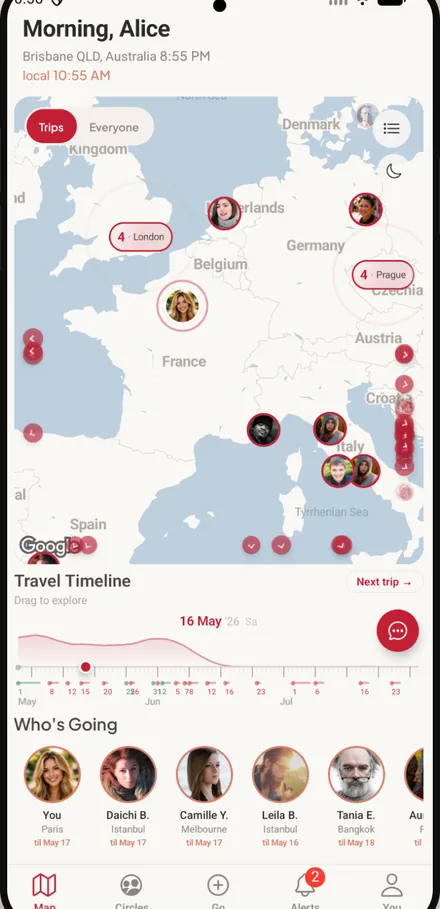
Noovo's Start with Where pillar exists for the exact moment one of these swaps clicks. You don't know who's in yet. You don't have dates. You have a city, and a hunch that it's the better version of the trip everyone else is taking. The app fills in the rest.
The numbers behind the swap
Per a 2025 Contiki Voice of a Generation survey, 80% of 18-35 year-olds said they'd choose a dupe destination over the headline option if cost was the only difference. The same survey found dupe travellers reported saving an average of $2,262 per trip, and, more telling, 61% said the dupe was actually better than the famous original would have been. Less crowded. More local. Easier to navigate.
The trend isn't a budget compromise. It's a quality upgrade dressed as a savings story. National Geographic's 2025 trends piece noted that dupes had crossed 400,000 mentions on TikTok by mid-2025, and the conversation had shifted from "cheaper option" to "the version you actually want."
The classic dupes worth knowing
- Lisbon for Barcelona. Same Mediterranean climate, same food culture, half the cruise tourists, better tile.
- Ljubljana for Vienna. Walkable city centre, similar Habsburg architecture, a fraction of the crowd.
- Taipei for Tokyo. The same density and food obsession, cheaper across every category, English signage almost as common.
- Sicily for the Amalfi Coast. Same dramatic coastline, deeper history, half the price per night.
- Mexico City for Buenos Aires. Same European-influenced metropolis-with-mountains feel, faster flight from North America.
- Da Nang for Bali. Beaches, surf, a strong cafe culture, far less of the influencer crush.
The coordination problem the dupe creates
Here's the catch nobody mentions. The dupe is the better trip, but it's a harder sell to a group. "We should go to Tokyo" is a sentence with no friction. "We should go to Taipei instead of Tokyo" is a sentence that needs explaining. The dupe is rarely the first instinct of a group of four. It's the instinct of one person who has to convince three others.
This is where the social trip-planning piece matters more than the destination piece. The dupe trip happens when one friend who's been there returns and pulls the rest of the group across the gap. The trips that don't happen are the ones where nobody makes the pitch.
The one question to ask first
Before you propose the dupe to the group, ask yourself: who's already going to the neighbourhood? If two of your friends are already planning to be in Spain or Portugal next spring, Lisbon is a five-minute conversation, not a thirty-minute one. The dupe lands easiest when it's already partially loaded.
Noovo's friend trip map shows you exactly this. Pick the region, see who's already going to be near, and the dupe becomes a join, not a pitch. The math gets better when the social proof is already there.
What makes a dupe actually work
- Similar core experience. The dupe should deliver on the same emotional reason you wanted the original. Beach for beach. Old-city for old-city.
- Lower friction at every step. Cheaper flights, fewer crowds, shorter restaurant queues. The dupe should make the daily texture of the trip better, not just the price.
- A friend who's been. Word-of-mouth from one friend who's been to the dupe outranks every list article. The group that has one Lisbon evangelist goes to Lisbon.
The dupe is the smartest trip you can plan in 2026. It's also a trip best taken with the friends who'd agree to go anywhere because the company is what matters.